How to Prevent Plumbing Problems When Installing a New Outdoor Irrigation Pressure Regulator
Maintaining the correct water pressure is essential for a reliable outdoor irrigation system. Whether homeowners use drip irrigation, garden sprinklers, or automated watering equipment, water pressure affects how efficiently the system distributes water throughout the property.
For homeowners in Billings and Laurel, Montana, installing an outdoor irrigation pressure regulator can help protect sensitive irrigation components from excessive pressure. These devices are designed to reduce incoming water pressure to a level appropriate for connected equipment.
However, installing a pressure regulator incorrectly can create several problems, including leaks, restricted water flow, damaged irrigation tubing, and inconsistent watering performance. Selecting the wrong regulator or installing it in the wrong location may prevent the system from operating as intended.
Understanding how irrigation pressure regulators work and how to install them properly can help homeowners avoid expensive plumbing problems and maintain dependable outdoor watering systems.
Brown Plumbing & Heating can help homeowners in Billings and Laurel evaluate outdoor water pressure concerns and determine appropriate plumbing solutions for irrigation connections.
Why Outdoor Irrigation Pressure Regulation Matters
Every irrigation system operates within a particular pressure range.
Some lawn sprinklers require higher operating pressures than certain drip irrigation systems.
Drip irrigation tubing and emitters are often designed to operate at relatively low pressures.
When water pressure exceeds the equipment’s recommended operating range, problems can develop.
Excessive pressure may cause tubing connections to separate, fittings to leak, or emitters to deliver water incorrectly.
Over time, these conditions can increase water waste and maintenance requirements.
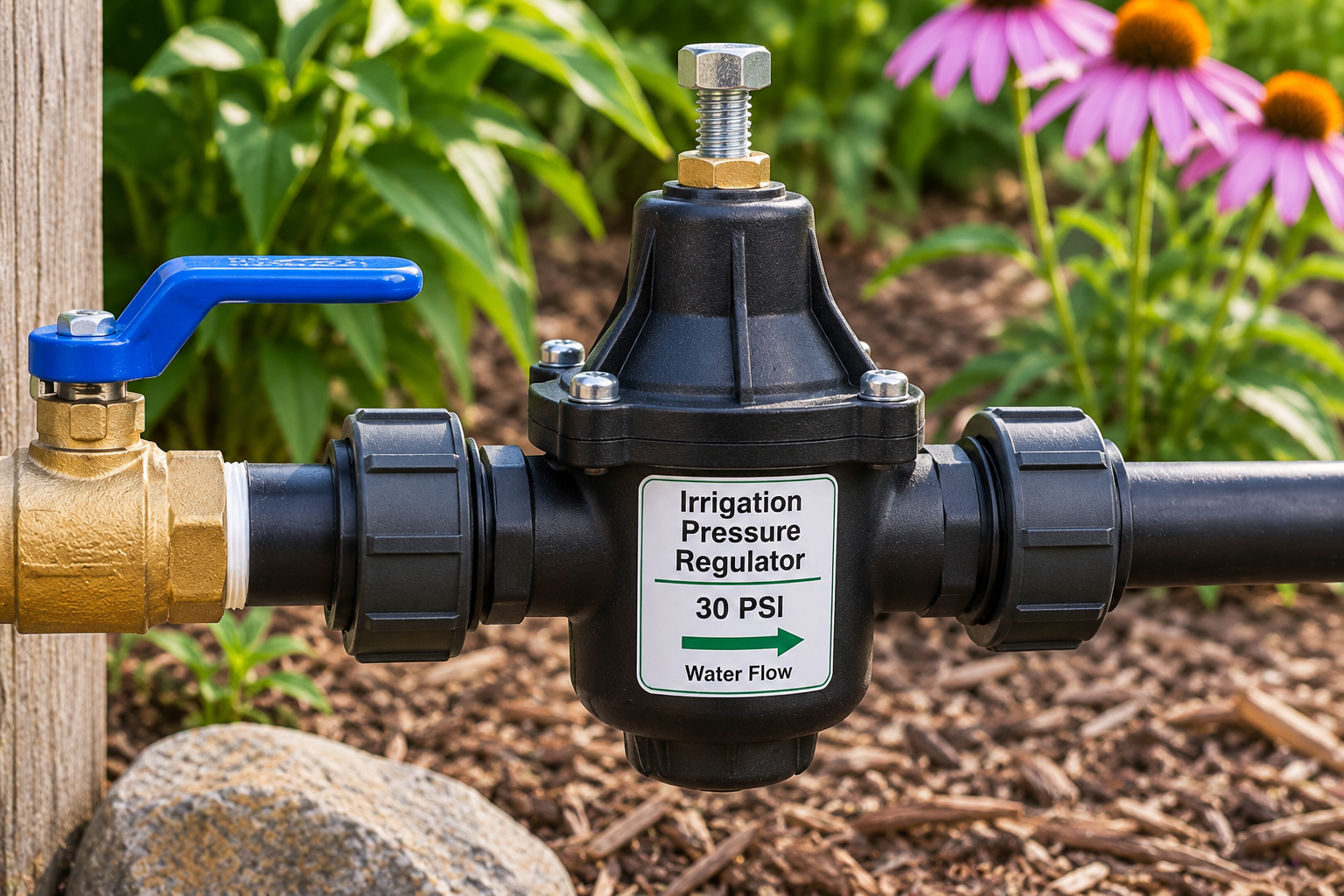
An irrigation pressure regulator helps reduce incoming pressure to a level appropriate for the connected equipment.
However, a regulator must be correctly sized and installed to perform as intended.
The goal is not simply to reduce pressure as much as possible.
Instead, the system should maintain enough pressure for reliable water distribution without exceeding the limits of the irrigation components.
Understand How an Irrigation Pressure Regulator Works
An irrigation pressure regulator controls downstream water pressure by responding to changes in the pressure and flow conditions within the system.
Many regulators use an internal diaphragm, spring, or other mechanical components to maintain a designated outlet pressure while operating within their specified conditions.
Some regulators are designed to provide a fixed outlet pressure.
Others are adjustable, allowing the pressure setting to be changed within an approved range.
The correct regulator depends on the type of irrigation equipment and the available water supply.
It is important to understand that many common irrigation regulators control pressure only while water is flowing.
Certain models do not maintain their rated outlet pressure when the system is closed and no water is moving.
This distinction can affect the selection of tubing, valves, and other components.
Homeowners should review the manufacturer’s specifications to determine how the regulator operates and whether it is suitable for the intended application.
Choose the Correct Pressure Regulator
Selecting the right regulator begins with understanding the irrigation system’s operating requirements.
Different irrigation devices require different pressures.
Some drip irrigation systems operate at relatively low pressure, while lawn sprinklers may need higher pressure to achieve their intended coverage.
Before purchasing a regulator, review the specifications for the connected irrigation equipment.
Identify the recommended operating pressure, required flow rate, and maximum allowable pressure.
The regulator should be rated for the available inlet pressure and the anticipated water flow.
A regulator that is too small for the irrigation system may restrict water delivery.
A device that operates outside its recommended flow range may not regulate pressure accurately.
Homeowners should also verify that the regulator’s connection sizes are compatible with the existing plumbing.
Choosing suitable equipment before installation can help prevent unnecessary modifications and performance problems.
Measure the Existing Water Pressure
Before installing a pressure regulator, it is helpful to understand the pressure available at the outdoor water connection.
A pressure gauge can provide useful information about the supply.
However, homeowners should recognize the difference between static pressure and operating pressure.
Static pressure is measured when water is not flowing.
Operating pressure is measured while the irrigation system is running.
Pressure may decrease when water begins flowing because of friction losses through pipes, valves, and other components.
A system with acceptable static pressure may still have insufficient operating pressure for certain irrigation equipment.
For this reason, evaluating pressure under realistic operating conditions is important.
A qualified plumber can help determine whether pressure regulation is necessary and whether other plumbing problems are affecting water delivery.
Avoid installing a regulator simply because watering performance appears poor.
Low water flow may result from clogged filters, undersized piping, damaged valves, or other restrictions rather than excessive pressure.
Match the Regulator to the Irrigation Flow Rate
Flow rate is another important factor when selecting an irrigation pressure regulator.
Every regulator has a recommended operating flow range.
If the water flow is below or above that range, the device may not maintain the intended outlet pressure.
For example, a small garden drip irrigation zone may use relatively little water.
A larger irrigation zone supplying several sprinklers may require a much greater flow rate.
The same regulator may not be suitable for both applications.
Homeowners should calculate or estimate the total flow required by the connected irrigation equipment.
The manufacturer’s specifications can help identify the appropriate regulator size.
If multiple irrigation zones operate separately, consider the flow through the regulator during each operating condition.
A regulator serving the entire system must be appropriate for the flow conditions it will experience.
Correct sizing helps maintain consistent pressure and protects connected components from unnecessary stress.
Choose the Right Installation Location
The location of the pressure regulator can affect both performance and maintenance.
For many drip irrigation systems, the regulator is installed upstream of the distribution tubing and emitters.
However, the exact order of the regulator, filter, control valves, and other components depends on the equipment and system design.
Some manufacturers specify that filtration should occur before the regulator.
Other components may have different installation requirements.
Homeowners should follow the manufacturer’s recommended arrangement rather than assuming every irrigation system uses the same configuration.
The regulator should also remain accessible for inspection and replacement.
Avoid burying a regulator that is not designed for direct burial.
If the regulator is installed in an irrigation valve box, make sure the enclosure provides adequate clearance.
The device should be protected from physical damage and excessive exposure to conditions outside its rated operating limits.
Proper placement makes maintenance easier and helps the regulator perform as intended.
Follow the Correct Water Flow Direction
Many irrigation pressure regulators are designed to operate with water flowing in one direction.
The regulator housing may include an arrow indicating the intended flow direction.
Installing the device backward can prevent proper operation and may damage internal components.
Before connecting the regulator, identify the inlet and outlet.
Confirm that the water supply will enter through the correct side.
This is especially important when the irrigation system includes several similar-looking fittings and valves.
Homeowners should also make sure the regulator is installed in the orientation permitted by the manufacturer.
Some models have specific installation requirements.
After installation, verify that water flows correctly through the device.
Following the indicated flow direction helps reduce the risk of malfunction and unnecessary repairs.
Use Compatible Plumbing Fittings
Outdoor irrigation pressure regulators may connect to threaded fittings, tubing adapters, or other approved components.
The appropriate connection method depends on the regulator and piping materials.
Using incompatible fittings can create leaks and damage the regulator housing.
Before installation, verify the connection type and size.
Avoid forcing mismatched threads together.
Plastic regulator housings can crack if fittings are overtightened.
Homeowners should follow the manufacturer’s recommendations for thread sealing and connection assembly.
Some connections require specific sealing materials, while others use washers or other built-in seals.
Applying excessive sealant or using the wrong material may interfere with proper assembly.
After making the connections, inspect the regulator to confirm that it is properly supported.
The device should not be left carrying the weight of unsupported piping.
Correct installation helps reduce mechanical stress and prevent water leaks.
Protect Irrigation Tubing From Excessive Pressure
Many drip irrigation systems use flexible tubing connected by compression, barbed, or other specialized fittings.
These components are designed to operate within specific pressure limits.
If the water supply pressure becomes too high, tubing may separate from fittings or develop leaks.
In some cases, excessive pressure can damage emitters or cause them to release more water than intended.
A suitable pressure regulator can help protect these components.
However, homeowners should consider whether the selected regulator provides protection during all relevant operating conditions.
Certain irrigation regulators maintain their rated outlet pressure only while water is flowing.
If downstream components may experience higher static pressure, the installation must account for that possibility.
Using tubing and fittings rated for the system’s actual pressure conditions is essential.
The entire irrigation assembly should be designed to operate safely within the manufacturer’s specifications.
Do Not Confuse Pressure Regulation With Backflow Prevention
A pressure regulator and a backflow prevention device serve different purposes.
A pressure regulator reduces water pressure.
A backflow prevention device helps protect the potable water supply from potentially contaminated water flowing backward.
Outdoor irrigation systems may come into contact with soil, fertilizers, pesticides, and other substances.
Without appropriate backflow protection, these materials can create a potential contamination risk under certain conditions.
Installing a pressure regulator does not eliminate the need for approved backflow prevention.
The appropriate protection depends on the system and applicable plumbing requirements.
Homeowners should verify that the irrigation connection includes suitable safeguards.
Specialized irrigation equipment that introduces fertilizers or chemicals may require additional protective measures.
A qualified plumber can help determine the appropriate arrangement.
Protecting drinking water quality should remain a priority whenever irrigation equipment connects to the household water supply.
Consider the Relationship Between Filters and Regulators
Filters and pressure regulators are often used together in drip irrigation systems.
A filter removes suspended particles that might otherwise clog emitters and small irrigation passages.
A regulator controls water pressure.
Both components help protect the irrigation system, but each performs a different function.
The order of installation should follow the manufacturer’s requirements.
Placing components in an unsuitable arrangement can create pressure problems or expose equipment to conditions outside its operating limits.
Homeowners should also remember that a dirty filter can restrict water flow.
If irrigation pressure appears low, check for clogged filtration equipment before adjusting or replacing the regulator.
A regulator cannot compensate for every restriction in the plumbing system.
Proper filtration and pressure regulation work together to support consistent water delivery.
Test the System After Installation
Testing is an important step when installing a new irrigation pressure regulator.
After completing the connections, turn on the water supply according to the manufacturer’s startup procedure.
Inspect the fittings and regulator housing for leaks.
Operate the irrigation zone and observe how the connected equipment performs.
When practical, measure downstream pressure while water is flowing.
Compare the reading with the regulator’s specifications and the irrigation equipment’s operating requirements.
A pressure reading that is consistently outside the expected range may indicate incorrect sizing, improper installation, or another system problem.
Homeowners should also check for unusually weak water flow.
If a regulator creates a significant restriction, the device may not be appropriate for the application.
Correct any installation problems before allowing the system to operate unattended.
Testing helps identify issues while connections remain accessible.
Watch for Signs of a Failing Pressure Regulator
Pressure regulators can wear out or develop problems over time.
Internal components may deteriorate due to age, sediment, pressure conditions, or repeated operation.
A failing regulator may no longer maintain the intended outlet pressure.
Homeowners may notice changes in watering performance.
Drip emitters may release water inconsistently, tubing connections may begin leaking, or sprinklers may operate differently than before.
However, these symptoms do not always mean the regulator has failed.
Clogged filters, damaged piping, malfunctioning valves, or changes in water demand can create similar problems.
Checking pressure under appropriate operating conditions can help narrow down the cause.
If the regulator is no longer performing within its specifications, replacement may be necessary.
Avoid making unapproved adjustments or attempting to modify sealed internal components.
A qualified professional can help determine whether repair, replacement, or another plumbing correction is appropriate.
Prevent Damage From Outdoor Exposure
Outdoor irrigation pressure regulators may be exposed to sunlight, moisture, dirt, and changing temperatures.
Over time, these conditions can affect certain materials.
Some plastic components are designed for outdoor exposure, while others require protection from direct sunlight.
Homeowners should review the manufacturer’s installation recommendations.
If an enclosure is used, provide adequate clearance and accessibility.
Avoid placing heavy objects against the regulator.
The connected piping should also be supported so that movement does not place unnecessary stress on the device.
Inspect exposed fittings for cracks, corrosion, and other deterioration.
If the regulator becomes damaged, replace it with a compatible product rated for the application.
Protecting the regulator from unnecessary exposure can help maintain reliable performance.
Prepare the Regulator for Montana Winters
Winterization is especially important for irrigation systems in Billings and Laurel.
Water trapped inside a pressure regulator can freeze during cold weather.
As the water expands, it may damage the regulator housing or internal components.
Some pressure regulators are not designed to withstand freezing conditions while filled with water.
Before winter, follow the manufacturer’s recommended winterization procedure.
Depending on the installation, this may involve shutting off the irrigation supply, relieving pressure, draining the regulator, or removing components for protected storage.
Homeowners should not assume that shutting off the water automatically empties the regulator.
Water may remain trapped inside the device even after other portions of the irrigation system have drained.
If the irrigation system is winterized using compressed air, follow the applicable equipment instructions and safety requirements.
Some components must be removed or bypassed before certain winterization procedures.
Improper compressed-air use can damage equipment or create injury risks.
Careful winter preparation helps reduce the chance of cracked regulators and leaking connections during spring startup.
Inspect the Regulator Before Spring Watering
Before using the irrigation system after winter, inspect the regulator carefully.
Look for cracks, loose fittings, damaged seals, and other visible problems.
If the device was removed for winter storage, reinstall it according to the manufacturer’s instructions.
Check that the flow direction is correct.
Restore water pressure using the recommended startup procedure.
Inspect the regulator and nearby fittings for leaks.
Operate the irrigation system and verify that connected equipment receives appropriate water pressure.
If the regulator was damaged during winter, replacement may be necessary.
Do not continue using a visibly cracked regulator housing.
Spring inspections can help identify problems before the irrigation system begins regular operation.
Maintain Consistent Irrigation Performance
Routine maintenance is important for preserving reliable irrigation pressure.
Periodically inspect the regulator for leaks and physical damage.
Check connected filters, valves, and tubing for restrictions or deterioration.
If watering performance changes, investigate the cause before adjusting irrigation schedules.
Some systems may benefit from periodic pressure measurements under normal operating conditions.
Compare measurements with the equipment’s recommended range.
Homeowners should also monitor the irrigation system for signs of excessive pressure.
Unexpectedly separated tubing connections or repeated fitting failures may indicate pressure conditions that require attention.
Keep the regulator accessible for inspection and replacement.
A small amount of preventive maintenance can help avoid larger plumbing problems.
Know When Professional Plumbing Assistance Is Necessary
Installing a pressure regulator may be relatively simple when the irrigation system already has properly designed connections and appropriate backflow protection.
However, some installations require changes to household plumbing, water supply piping, or irrigation control arrangements.
Professional assistance may be appropriate when water pressure is unusually high, the system experiences repeated leaks, or the existing irrigation equipment cannot operate reliably.
A plumber can help evaluate the available supply pressure, determine whether a regulator is necessary, and identify other plumbing restrictions.
Professional installation may also be appropriate when the pressure regulator is part of a larger irrigation system connected to the home’s potable water supply.
Brown Plumbing & Heating can help homeowners in Billings and Laurel evaluate outdoor water pressure concerns and determine appropriate plumbing repair or installation options.
Keep Your Irrigation System Protected and Efficient
An outdoor irrigation pressure regulator can play an important role in protecting watering equipment from excessive pressure.
When properly selected and installed, it can help maintain suitable operating conditions for drip irrigation tubing, emitters, and other irrigation components.
However, dependable performance requires more than attaching a regulator to the water supply.
Homeowners should evaluate incoming pressure, determine the irrigation system’s flow requirements, and select a regulator rated for the application.
Compatible fittings, proper installation direction, appropriate backflow protection, and accessible placement are also important.
In Billings and Laurel, winterization should be part of regular irrigation maintenance because freezing temperatures can damage regulators and connected plumbing.
Routine inspections and pressure testing can help identify problems before they lead to leaks or equipment failure.
With proper planning and maintenance, an irrigation pressure regulator can support consistent watering while helping protect the home’s outdoor plumbing system.
For homeowners experiencing outdoor water pressure problems, irrigation supply leaks, or damaged plumbing connections, Brown Plumbing & Heating can help assess the situation and recommend appropriate solutions.
Read Next: How to Prevent Plumbing Problems When Installing a New Outdoor Drip Irrigation Filter