How to Prevent Plumbing Problems When Installing a New Outdoor Pop-Up Sprinkler Head
A properly functioning sprinkler system helps homeowners maintain healthy lawns and landscaped areas while making outdoor watering more convenient. One of the most important components of a residential irrigation system is the pop-up sprinkler head, which distributes water across designated sections of the lawn.
For homeowners in Billings and Laurel, Montana, installing a new outdoor pop-up sprinkler head can help improve watering coverage, replace damaged equipment, and maintain an efficient irrigation system. However, improper installation can cause leaking connections, uneven water distribution, low water pressure, and unnecessary water waste.
Pop-up sprinkler heads must be properly connected to underground irrigation piping, positioned at the correct height, and adjusted to deliver water where it is needed.
A sprinkler installed too deeply may become obstructed by grass and soil, while one positioned too high may be damaged by lawnmowers or other landscaping equipment.
Understanding the installation process and common plumbing concerns can help homeowners avoid expensive repairs and maintain reliable outdoor watering.
Brown Plumbing & Heating can help homeowners in Billings and Laurel evaluate outdoor water supply concerns and determine appropriate plumbing solutions for irrigation systems.
Why Proper Sprinkler Head Installation Matters
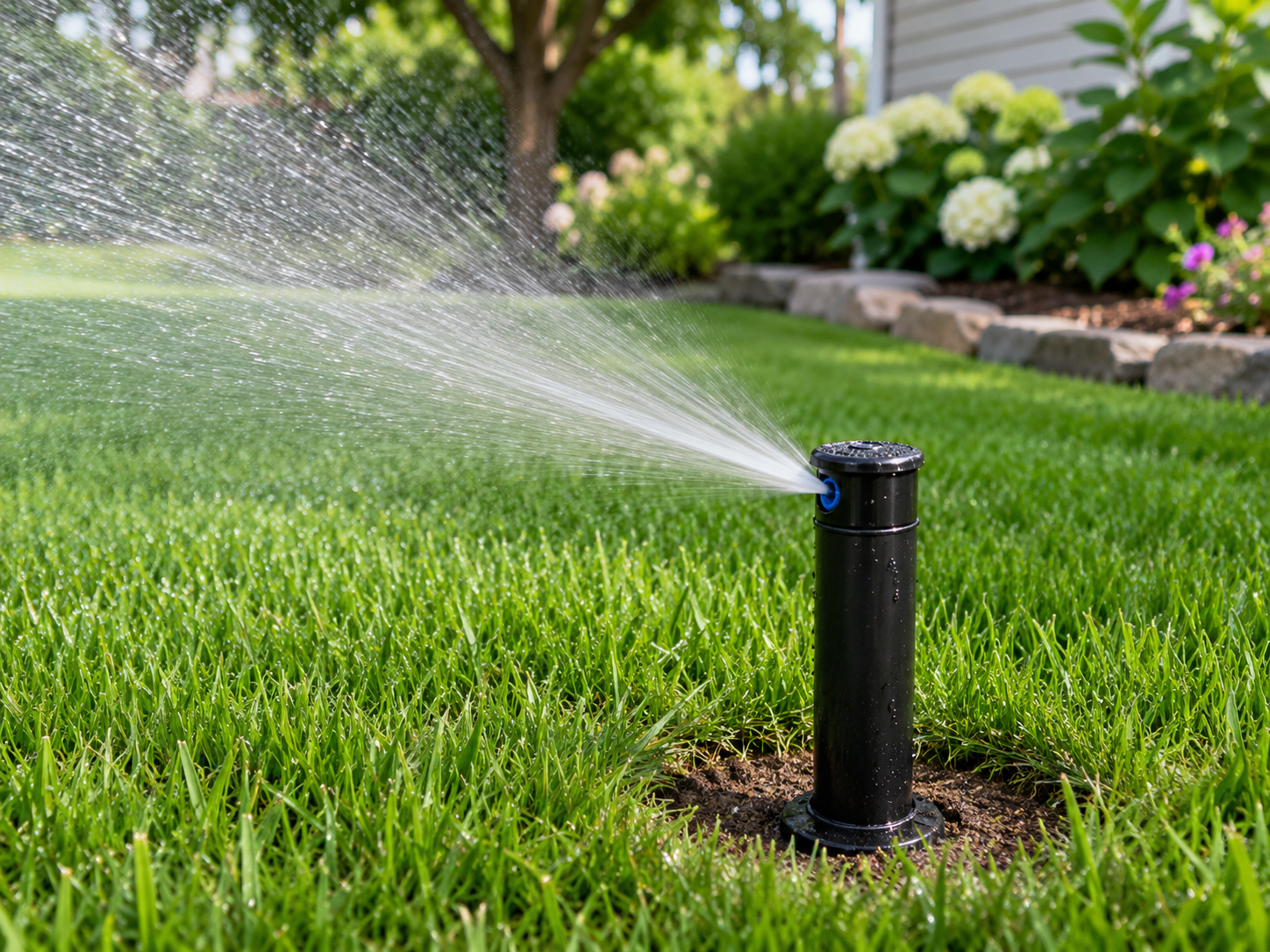
Pop-up sprinkler heads are designed to remain near or below ground level when the irrigation system is inactive.
When water pressure reaches the sprinkler, its internal mechanism raises the nozzle above the surrounding grass.
Water then flows through the nozzle and is distributed across the intended watering area.
When the irrigation cycle ends, the sprinkler retracts.
This design helps protect the sprinkler from some types of damage while maintaining a relatively unobtrusive appearance in the lawn.
However, proper operation depends on several factors.
The sprinkler must receive sufficient water pressure, connect securely to the underground piping, and remain properly aligned with the surrounding landscaping.
If any of these conditions are incorrect, the sprinkler may not function as intended.
A poorly installed sprinkler head can also create underground leaks that remain difficult to identify until the lawn becomes excessively wet.
Careful installation helps protect the entire irrigation system.
Choose the Correct Type of Pop-Up Sprinkler Head
Not all pop-up sprinkler heads operate in the same way.
Some use fixed spray nozzles that distribute water in a relatively consistent pattern.
Others use rotating or multi-stream nozzles that distribute water differently.
Pop-up rotors may also be used for larger lawn areas.
The correct type depends on the size of the watering area, available water pressure, flow rate, and existing irrigation equipment.
For smaller lawns or narrow landscaping sections, a spray-style sprinkler may be appropriate.
Larger areas may require equipment designed to distribute water over greater distances.
However, homeowners should avoid replacing an existing sprinkler with a different type without considering the rest of the irrigation zone.
Different sprinklers can have significantly different water application rates.
Combining incompatible sprinkler types may result in some areas receiving too much water while others remain dry.
Review the manufacturer’s specifications and the existing irrigation design before selecting a replacement.
Match the Sprinkler to the Existing Irrigation Zone
Every irrigation zone is designed to operate within a particular range of water pressure and flow.
The number of sprinklers connected to the zone affects how much water each sprinkler receives.
Installing a sprinkler head that requires more water than the available supply can reduce performance throughout the zone.
For example, a replacement sprinkler with a substantially higher flow rate may cause neighboring sprinklers to lose pressure.
This can result in shorter spray distances and uneven watering.
Homeowners should identify the specifications of the existing sprinklers whenever possible.
Matching compatible equipment helps maintain consistent performance.
If the irrigation zone already has pressure or coverage problems, installing a new sprinkler may not solve the underlying issue.
The problem could involve clogged piping, a leaking underground connection, or insufficient water supply.
Evaluating the complete zone before making changes can help prevent unnecessary repairs.
Select the Proper Sprinkler Location
Sprinkler placement affects how evenly water reaches the lawn.
A sprinkler positioned too close to a sidewalk may waste water by spraying onto concrete.
A sprinkler located too far from neighboring sprinklers may leave dry areas between their coverage patterns.
Proper sprinkler spacing depends on the equipment’s designed spray distance, available pressure, wind conditions, and landscaping layout.
Many irrigation systems are designed with overlapping sprinkler coverage to provide more even water distribution.
However, the appropriate arrangement depends on the nozzle and sprinkler type.
Homeowners should review the existing irrigation layout before adding or relocating a sprinkler head.
Consider nearby trees, shrubs, fences, and other obstacles that may block the spray.
A location that works well for a newly installed lawn may become less effective as landscaping grows.
Proper placement helps reduce water waste and maintain more consistent lawn moisture.
Locate Underground Utilities Before Digging
Installing or relocating a sprinkler head may require excavation.
Before digging, homeowners should identify existing underground utilities.
Residential properties may contain buried electrical cables, gas lines, communication lines, water supply pipes, and other infrastructure.
In Montana, homeowners should contact Montana 811 before excavation to request utility marking.
Certain privately installed lines may require separate locating services.
These may include irrigation piping, landscape lighting cables, and other owner-installed connections.
Never assume that an area is safe to excavate simply because it is located within a lawn.
Careful digging is especially important when working near existing sprinkler piping.
Accidentally damaging an irrigation supply line can create an underground leak and require additional repairs.
Proper planning helps protect existing infrastructure and keeps the installation safer.
Inspect the Existing Underground Connection
Before connecting a new sprinkler head, inspect the existing irrigation fitting.
Look for cracks, damaged threads, loose connections, and signs of deterioration.
If the old sprinkler was broken by a lawnmower or vehicle, the impact may also have damaged the fitting beneath it.
Replacing only the visible sprinkler head may not correct the problem.
A cracked underground elbow or riser can continue leaking after the new sprinkler is installed.
Homeowners should also check whether the supply pipe has shifted or become misaligned.
Avoid forcing a new sprinkler onto a damaged or crooked connection.
If the fitting is cracked or stripped, it should be repaired using components compatible with the irrigation system.
Inspecting the underground connection before backfilling can help prevent recurring leaks.
Use the Correct Sprinkler Riser or Connector
Pop-up sprinkler heads are commonly connected to underground piping through risers, elbows, or flexible swing-pipe assemblies.
These components provide a connection between the irrigation line and the sprinkler body.
The correct arrangement depends on the existing system and sprinkler design.
A rigid connection may be appropriate for some installations, while a flexible connection can provide limited movement and help accommodate positioning.
However, all components must be rated for the irrigation system’s operating conditions.
Homeowners should verify connection sizes and thread compatibility.
Avoid using adapters that do not fit securely.
A loose connection may leak when the sprinkler zone becomes pressurized.
The assembly should also provide proper support without placing excessive stress on the underground water line.
Correct fittings help maintain reliable operation and reduce the risk of buried leaks.
Install the Sprinkler at the Correct Height
Sprinkler height is one of the most important installation details.
A sprinkler installed too low may become obstructed by grass, soil, or mulch.
This can interfere with its spray pattern and prevent water from reaching the intended area.
A sprinkler installed too high may become vulnerable to damage from lawnmowers, foot traffic, or other equipment.
The appropriate height depends on the sprinkler model and surrounding landscaping.
In established lawns, the top of the retracted sprinkler is generally positioned according to the manufacturer’s instructions relative to the finished ground level.
Homeowners should account for the thickness of the lawn and any nearby edging.
Avoid burying the sprinkler body beneath excessive soil.
Also avoid allowing the sprinkler to protrude above the surface in a way that creates an obstacle.
Proper height helps the sprinkler operate and retract correctly.
Keep the Sprinkler Body Properly Aligned
Pop-up sprinkler heads should be installed in the orientation specified by the manufacturer.
A sprinkler leaning significantly to one side may distribute water unevenly.
It may also place unnecessary stress on underground fittings.
Before backfilling, verify that the sprinkler is positioned correctly.
The surrounding soil should provide suitable support without forcing the sprinkler into an unnatural position.
If the underground fitting is misaligned, correct the connection rather than attempting to hold the sprinkler upright with excessive soil pressure.
A stable installation helps prevent movement during normal operation.
Homeowners should also check the sprinkler’s position after the soil settles.
If the sprinkler begins leaning or sinking, further adjustment may be needed.
Correct alignment helps maintain consistent coverage and reliable retraction.
Prevent Dirt From Entering the Irrigation Line
Soil and debris can enter irrigation piping while an old sprinkler head is removed.
If these materials travel through the system, they may clog nozzles or interfere with other irrigation components.
Before disconnecting a sprinkler, shut off the affected irrigation supply as appropriate.
Keep the exposed opening protected from loose soil.
If debris enters the piping, the line may need to be flushed using the manufacturer’s recommended procedure.
Some sprinkler heads include removable filters or screens that can collect particles.
These components should be inspected and cleaned as directed.
Avoid attempting to clear a clogged nozzle by forcing sharp objects into its openings.
This can damage the nozzle and change the spray pattern.
Keeping the irrigation line clean helps maintain reliable water distribution.
Understand Water Pressure Requirements
Pop-up sprinkler heads require suitable operating pressure.
If pressure is too low, the sprinkler may not rise fully or distribute water across its intended range.
Low pressure can also cause an uneven spray pattern.
Excessive pressure may create misting, overspray, and unnecessary water loss.
Some sprinkler designs incorporate pressure regulation to help maintain appropriate operating conditions.
Others depend on upstream pressure regulation or compatible system components.
Homeowners should review the manufacturer’s recommended pressure range.
If several sprinklers in the same zone operate poorly, the problem may involve the irrigation supply rather than one individual head.
A qualified plumber can help determine whether water pressure, pipe restrictions, or leaking connections are affecting performance.
Avoid increasing household water pressure simply to improve sprinkler coverage.
Excessive pressure may damage other plumbing components.
Adjust the Spray Pattern Correctly
After installation, the sprinkler’s spray pattern should be adjusted to cover the intended area.
Some nozzles provide fixed spray patterns.
Others allow the watering arc or distance to be adjusted.
The available adjustments depend on the sprinkler model.
Homeowners should follow the manufacturer’s instructions.
Aim the sprinkler so that water reaches the intended landscaping without excessive overspray onto sidewalks, driveways, or buildings.
Water repeatedly striking siding, windows, or exterior doors can create unnecessary moisture exposure.
Sprinklers should also avoid directing water toward electrical equipment or other sensitive components.
After making adjustments, operate the irrigation zone and observe the coverage.
A properly adjusted sprinkler helps reduce water waste and maintain more even watering.
Check for Leaks Before Backfilling
Testing is essential when installing a new pop-up sprinkler head.
After completing the connection, restore water to the irrigation zone according to the system’s startup procedure.
Observe the sprinkler while it operates.
Check for water escaping around the underground fitting or sprinkler body.
Some moisture around the sprinkler may result from normal spray, but continuous bubbling or water rising from the soil near the connection can indicate a leak.
If the connection leaks, shut off the affected supply and correct the problem.
Do not bury a leaking fitting.
Once the installation has been tested successfully, backfill the excavation using suitable soil and methods that provide support without damaging the sprinkler.
Testing before backfilling can help prevent repeat excavation and unnecessary water loss.
Prevent Water From Pooling Around Sprinkler Heads
Water collecting around a sprinkler can indicate several different conditions.
A damaged underground connection may allow water to escape beneath the surface.
A sprinkler head may also leak because of a worn internal seal.
In other situations, water may drain from low sprinkler heads after a watering cycle ends.
This occurs when water remaining inside elevated irrigation piping moves toward lower outlets.
Temporary low-head drainage is different from continuous water flow caused by a malfunctioning zone valve.
Homeowners should observe when pooling occurs.
If water collects only briefly after irrigation stops, it may be related to normal drainage.
If the area remains wet for extended periods or water continues escaping, further investigation may be necessary.
Certain sprinkler systems can use compatible check-valve-equipped heads to reduce low-head drainage.
However, these components should be selected based on the system’s design.
Correct diagnosis helps prevent unnecessary repairs.
Protect Sprinkler Heads From Lawn Equipment
Pop-up sprinkler heads can be damaged by lawnmowers, trimmers, vehicles, and other landscaping equipment.
A sprinkler that does not retract completely may be especially vulnerable.
Repeated impacts can crack the housing or damage the underground connection.
Homeowners should inspect sprinkler heads before mowing.
Check that the sprinkler retracts properly when the irrigation cycle ends.
Avoid driving over sprinkler heads unless the installation is specifically designed for that exposure.
If a sprinkler becomes tilted or damaged, inspect the underground connection before replacing it.
A flexible connection may help accommodate limited movement in some installations, but it does not make the sprinkler immune to impact damage.
Careful maintenance can help extend the service life of the equipment.
Recognize the Signs of a Clogged Sprinkler Nozzle
Clogged nozzles can interfere with water distribution.
One common symptom is a sprinkler that rises normally but produces an uneven or restricted spray pattern.
Water may emerge from only part of the nozzle.
The spray distance may also become shorter than expected.
Dirt, sand, and other debris can collect inside nozzle openings or filters.
Before replacing the entire sprinkler, follow the manufacturer’s recommended cleaning procedure.
The nozzle or filter may be removable for inspection.
Shut off the affected water supply and relieve pressure as appropriate before servicing the equipment.
Avoid using excessive force or damaging the nozzle openings.
If cleaning does not restore proper operation, replacement may be necessary.
Maintaining clean nozzles helps reduce uneven watering.
Consider the Needs of Different Landscaping Areas
Different plants require different watering conditions.
Established lawns may have different irrigation needs than flower beds, shrubs, and vegetable gardens.
A pop-up sprinkler system should be designed with those differences in mind.
For example, a sprinkler that distributes water broadly across a lawn may not be ideal for a narrow garden bed.
Repeated watering of plant foliage may also be undesirable for certain plants.
Some areas may benefit from drip irrigation or another watering method instead.
Homeowners should choose equipment based on the intended landscaping rather than convenience alone.
When replacing an existing sprinkler, consider whether the surrounding landscape has changed.
Trees may have grown larger, garden beds may have expanded, or lawn areas may have been replaced with other features.
Adjusting irrigation equipment to match current landscaping can improve water distribution.
Avoid Overwatering Near the Home
Improperly positioned sprinklers can direct excessive water toward a home’s foundation.
Repeated watering near the building may contribute to saturated soil and unnecessary moisture exposure.
In some cases, poor drainage can make these conditions worse.
Homeowners should inspect sprinkler coverage near exterior walls.
Avoid directing water against siding, foundation openings, or other vulnerable building materials.
If water repeatedly collects near the home, investigate whether the cause involves irrigation settings, grading, drainage, or a plumbing leak.
Changing the nozzle or adjusting the spray pattern may help in certain situations.
However, persistent drainage problems may require additional evaluation.
Proper irrigation placement helps protect landscaping while reducing unnecessary moisture near the building.
Prepare Sprinkler Heads for Montana Winters
Winter temperatures in Billings and Laurel can damage irrigation equipment when water remains trapped inside it.
As water freezes, it expands and may crack sprinkler housings, fittings, or underground piping.
Pop-up sprinkler heads are not automatically protected from freezing simply because they retract into the ground.
The entire irrigation system must be winterized according to its design.
Some systems require draining, while others use a properly performed compressed-air blowout.
The correct procedure depends on the piping, valves, sprinkler heads, and other equipment.
Improper compressed-air winterization can damage components or create injury risks.
Homeowners should follow manufacturer guidance and appropriate safety procedures.
If the system includes pressure regulators, flow sensors, or backflow prevention equipment, those components may require specific winterization steps.
Proper preparation helps reduce the chance of damaged sprinklers when spring arrives.
Inspect Sprinklers Before Spring Startup
Before starting the irrigation system in spring, inspect visible sprinkler heads for damage.
Look for cracked housings, missing nozzles, tilted bodies, and accumulated debris.
Check that the sprinkler openings are not obstructed by soil or grass.
Restore water to the system using the appropriate startup procedure.
Activate each irrigation zone separately.
Observe whether the sprinkler heads rise and retract correctly.
Inspect the spray patterns and check for leaks.
If one sprinkler does not function properly, determine whether the problem is isolated or affects the entire zone.
A single damaged nozzle may require a simple replacement.
Multiple underperforming sprinklers may indicate a broader pressure or supply problem.
Spring inspections help identify damage before regular watering begins.
Maintain Sprinkler Heads Throughout the Growing Season
Routine maintenance helps keep pop-up sprinkler heads functioning properly.
Periodically inspect the spray patterns while the irrigation system operates.
Look for sprinklers that fail to rise, retract, rotate, or distribute water correctly.
Remove grass and debris that obstruct the sprinkler body.
Check for persistent moisture around the underground connections.
If a sprinkler is damaged by landscaping equipment, repair it promptly.
Review irrigation schedules during periods of changing weather.
Watering requirements may vary throughout the season.
Homeowners should also monitor the condition of the irrigation valves, filters, and other supply components.
A properly functioning sprinkler depends on the entire system operating reliably.
Regular maintenance can help reduce unnecessary repairs and water waste.
Know When Professional Plumbing Assistance Is Appropriate
Replacing an existing sprinkler head with a compatible model may be relatively straightforward.
However, installing new sprinkler locations or modifying underground water supply piping can be more complicated.
Professional assistance may be appropriate when the irrigation system experiences repeated leaks, low water pressure, or damaged underground connections.
A plumber can help evaluate whether the problem involves the sprinkler assembly or another part of the water supply.
If several irrigation zones experience similar problems, the issue may require a broader inspection.
Professional evaluation may also be useful when modifying connections to the household potable water supply or addressing backflow protection concerns.
Brown Plumbing & Heating can help homeowners in Billings and Laurel assess outdoor plumbing problems and determine appropriate repair or installation options.
Keep Your Outdoor Sprinkler System Reliable
A properly installed outdoor pop-up sprinkler head can help maintain consistent watering coverage while reducing unnecessary water waste.
However, reliable operation depends on more than selecting a sprinkler that fits the existing connection.
Homeowners should consider water pressure, flow requirements, sprinkler placement, compatible fittings, and appropriate installation height.
Protecting underground piping, preventing debris from entering the system, and testing connections before backfilling are also important.
In Billings and Laurel, winter preparation is especially important because freezing water can damage sprinkler heads and buried irrigation components.
Routine inspections throughout the growing season can help identify clogged nozzles, leaking fittings, and damaged sprinkler bodies before they become more expensive problems.
With careful installation and maintenance, pop-up sprinkler heads can provide dependable water distribution while helping protect the home’s outdoor plumbing system.
For homeowners experiencing sprinkler supply leaks, damaged underground irrigation piping, unusual water pressure, or other outdoor plumbing concerns, Brown Plumbing & Heating can help evaluate the situation and recommend appropriate solutions.
Read Next: How to Prevent Plumbing Problems When Installing a New Outdoor Irrigation Soil Moisture Sensor