How to Prevent Plumbing Problems When Installing a New Outdoor Sprinkler Check Valve
A properly functioning irrigation system helps homeowners maintain healthy lawns, gardens, and landscaped areas while reducing unnecessary water waste. However, even when sprinkler heads and irrigation valves operate correctly, some systems experience unwanted water drainage after watering cycles end.
For homeowners in Billings and Laurel, Montana, installing an outdoor sprinkler check valve can help reduce certain drainage problems and improve irrigation performance. These components are designed to prevent water from flowing backward or draining through particular sections of a sprinkler system under specific operating conditions.
One common application involves preventing water remaining in irrigation pipes from draining through sprinkler heads located at lower elevations. This problem, commonly called low-head drainage, can create puddles, muddy areas, and unnecessary water loss.
Although sprinkler check valves can be useful, improper installation may cause restricted water flow, leaking connections, and irrigation performance problems.
Understanding how sprinkler check valves work, when they are needed, and how to install them correctly can help homeowners protect their outdoor plumbing systems.
Brown Plumbing & Heating can help homeowners in Billings and Laurel evaluate outdoor plumbing concerns and determine appropriate solutions for irrigation water supply connections.
What Is an Outdoor Sprinkler Check Valve?
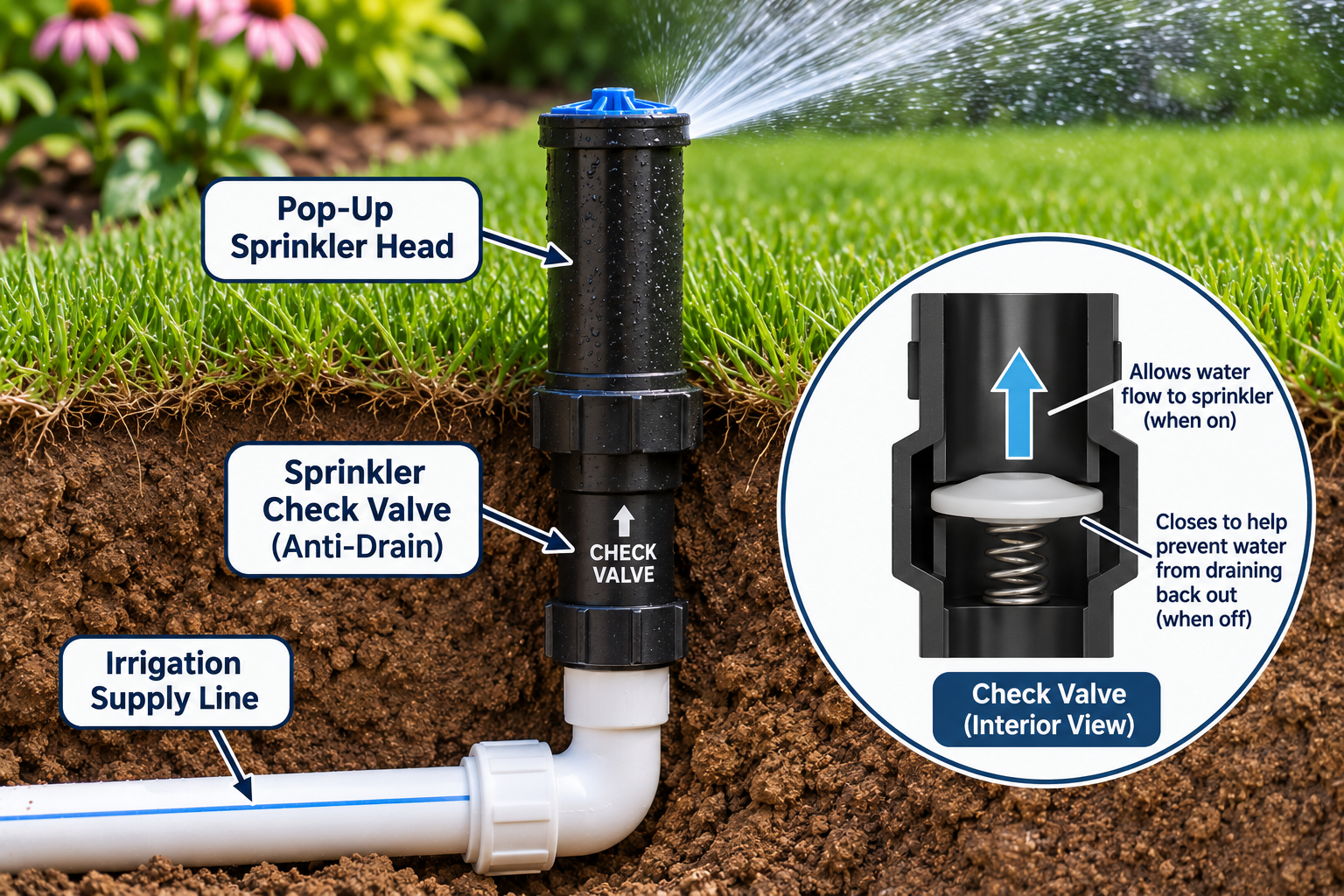
A sprinkler check valve is a plumbing component designed to permit water movement in one direction while restricting reverse flow under specified conditions.
In residential irrigation systems, certain check valves are designed specifically to prevent water from draining out of sprinkler heads after the irrigation zone shuts off.
These devices are often referred to as anti-drain check valves.
Some sprinkler heads include built-in check valves, while other systems use compatible components installed as part of the sprinkler connection.
The correct arrangement depends on the irrigation system and the manufacturer’s specifications.
When a sprinkler zone operates, water pressure allows water to move through the check valve and reach the sprinkler nozzle.
When the zone shuts off and pressure decreases, the check valve closes to help retain water within the piping.
However, check valves are not designed to correct every type of irrigation leak.
Understanding their intended function is important before deciding whether installation is necessary.
Why Low-Head Drainage Happens
Low-head drainage occurs when water remaining inside irrigation piping flows toward sprinkler heads located at lower elevations after a watering cycle ends.
This commonly happens on properties with sloped lawns or landscaping areas that have noticeable changes in elevation.
When the irrigation valve closes, water may remain inside the distribution pipes.
Gravity can cause this water to move toward the lowest sprinkler outlets.
If the sprinkler heads do not have suitable drainage control, the remaining water may escape through the nozzles.
Homeowners may notice puddles forming around one or more sprinkler heads after irrigation stops.
The discharge may continue temporarily until the water remaining in the elevated piping has drained.
This is different from a sprinkler that receives a continuous supply of water because of a malfunctioning irrigation zone valve.
A compatible check valve may help reduce low-head drainage by limiting the amount of water that escapes through the sprinkler.
However, the correct solution depends on the cause of the water discharge.
Recognize the Difference Between Drainage and a Plumbing Leak
Before installing a sprinkler check valve, homeowners should determine whether the problem involves normal drainage or an actual plumbing leak.
Low-head drainage generally occurs after an irrigation cycle ends.
Water remaining in the piping moves toward lower sprinkler heads and eventually stops flowing.
A leaking irrigation zone valve may produce similar symptoms, but the discharge can continue because water is still passing through a valve that should be closed.
An underground pipe leak may also cause persistent moisture.
Homeowners should pay attention to when the water appears and how long it continues.
If a sprinkler releases a limited amount of water after the zone shuts off, low-head drainage may be responsible.
If water continues escaping for an extended period or the ground remains wet even when irrigation has been inactive, further investigation is appropriate.
Installing a check valve without identifying the cause may fail to correct the problem.
A professional plumbing inspection can help determine whether the issue involves gravity drainage, damaged piping, or malfunctioning irrigation equipment.
Choose the Right Type of Check Valve
Not every check valve is appropriate for a residential sprinkler installation.
Some check valves are designed for general water supply applications.
Others are specifically engineered for irrigation sprinkler heads and low-head drainage prevention.
Certain sprinkler manufacturers offer models with integrated check valves.
Other products may use compatible check valve assemblies designed for particular sprinkler connections.
Before purchasing equipment, homeowners should identify the existing sprinkler model and its connection requirements.
The check valve should be rated for the system’s operating pressure and flow conditions.
The valve’s opening characteristics must also be compatible with the available irrigation pressure.
Using the wrong device can restrict water delivery or interfere with sprinkler operation.
Homeowners should follow the manufacturer’s recommendations rather than installing a generic plumbing check valve without confirming its suitability.
Select a Check Valve With the Appropriate Holding Capacity
One important consideration is the amount of elevation difference the check valve is designed to accommodate.
Some sprinkler check valves are rated to resist drainage caused by a specified height of water above the sprinkler.
This capability is sometimes described in terms of elevation or pressure.
A check valve with insufficient holding capacity may still allow water to drain through the lowest sprinkler heads.
However, selecting a device with excessive opening resistance can also create problems.
The sprinkler must receive enough pressure to open the check valve and operate properly.
Before installation, homeowners should review the manufacturer’s specifications and consider the elevation changes across the irrigation zone.
A property with a relatively flat lawn may have different requirements than one with a steeply sloped backyard.
Choosing a suitable valve can help reduce unwanted drainage without unnecessarily restricting irrigation performance.
Inspect the Existing Sprinkler System
Before installing a new check valve, inspect the sprinkler head and surrounding irrigation equipment.
Look for cracked sprinkler housings, damaged nozzles, and loose underground connections.
Check that the sprinkler rises and retracts correctly.
A sprinkler head that does not retract fully may have debris inside its mechanism or another operating problem.
Inspect the irrigation zone for signs of inconsistent water pressure.
If several sprinklers operate poorly, the problem may involve the water supply rather than the individual sprinkler heads.
Homeowners should also consider the age and condition of the equipment.
An older sprinkler head may be better replaced with a compatible model that includes a built-in check valve.
However, the replacement must match the irrigation zone’s flow and coverage requirements.
Inspecting the system before installation helps prevent unnecessary repairs and equipment purchases.
Consider Sprinkler Heads With Built-In Check Valves
Many irrigation equipment manufacturers offer sprinkler heads with integrated anti-drain check valves.
These products can simplify installation because the check valve is incorporated into the sprinkler assembly.
Instead of adding a separate component to the underground connection, homeowners may be able to replace the existing sprinkler with a compatible check-valve-equipped model.
However, not every sprinkler head is interchangeable.
Replacement equipment must match the existing connection size, operating pressure, and irrigation requirements.
The nozzle type and water application rate should also be considered.
Replacing a spray head with an incompatible model may create uneven watering throughout the zone.
Homeowners should verify the manufacturer’s specifications before selecting a replacement.
A properly matched sprinkler head can help reduce low-head drainage while maintaining appropriate irrigation coverage.
Choose an Appropriate Installation Location
The location of a sprinkler check valve depends on the type of equipment being used.
For low-head drainage control, check valves are commonly incorporated into sprinkler heads located at lower elevations.
These are often the outlets where water collects after the irrigation zone shuts off.
However, the correct installation arrangement depends on the entire irrigation system.
Adding a check valve at an unsuitable location may not prevent water from escaping through other sprinkler heads.
Homeowners should evaluate the elevation changes across the irrigation zone.
Identify where unwanted drainage occurs.
Then determine which compatible check valve arrangement is recommended by the equipment manufacturer.
The installation should also remain accessible for future inspection and maintenance.
Careful placement helps the device perform its intended function.
Locate Underground Utilities Before Digging
Installing or replacing sprinkler components may require excavation around underground irrigation piping.
Before digging, homeowners should identify buried utilities.
Residential properties may contain electrical cables, gas lines, communication lines, water supply pipes, and other infrastructure.
In Montana, homeowners should contact Montana 811 before excavation to request utility marking.
Privately installed utility lines may require separate locating services.
These can include certain irrigation pipes, landscape lighting cables, and other owner-installed connections.
Even relatively shallow excavation can damage underground infrastructure.
Homeowners should also be cautious when digging around existing sprinkler connections.
A shovel can crack an irrigation pipe or damage a fitting if excessive force is used.
Planning the excavation carefully can help prevent additional plumbing problems.
Use Compatible Plumbing Connections
A sprinkler check valve must connect securely to the existing irrigation equipment.
Depending on the product, the installation may involve threaded fittings, specialized adapters, or an integrated sprinkler assembly.
Homeowners should verify that all connections are compatible.
Avoid forcing mismatched threads together.
Plastic irrigation components can crack if overtightened.
The manufacturer’s instructions should determine whether thread sealant, washers, or another sealing method is required.
Some sprinkler connections are designed to seal without additional materials.
Using unnecessary sealant can interfere with proper assembly.
Before installing the new component, inspect the existing fitting for damaged threads or cracks.
A check valve installed on a damaged underground connection may still leak.
Proper fittings help maintain watertight connections and reduce unnecessary repairs.
Understand How Check Valves Affect Water Pressure
Sprinkler check valves introduce some resistance to water movement.
Depending on the design, a minimum pressure difference may be required to open the valve.
If the irrigation system already operates with marginal pressure, adding an unsuitable check valve may affect performance.
A sprinkler may rise more slowly or fail to achieve its intended spray distance.
Homeowners should review the manufacturer’s operating specifications before installation.
The selected check valve must be appropriate for the available water pressure.
If several sprinklers in the same zone already experience low pressure, the underlying cause should be investigated.
Possible problems include clogged filters, leaking underground piping, partially closed valves, or excessive water demand.
A check valve cannot correct insufficient supply pressure.
Proper system evaluation helps prevent unnecessary restrictions and maintains reliable sprinkler operation.
Do Not Confuse Sprinkler Check Valves With Backflow Prevention
A sprinkler check valve used to prevent low-head drainage is not the same as an approved backflow prevention assembly.
These components serve different purposes.
An anti-drain check valve helps limit unwanted water discharge through a sprinkler head.
A backflow prevention assembly protects the potable water supply from certain reverse-flow conditions that could introduce contaminants.
Outdoor irrigation systems can come into contact with soil, fertilizers, pesticides, and other substances.
Appropriate backflow protection is therefore an important part of irrigation plumbing.
Homeowners should never remove or bypass an approved backflow prevention assembly because they have installed sprinkler check valves.
The required protection depends on the water supply connection, system design, and applicable plumbing requirements.
A qualified plumber can help determine whether the irrigation system includes suitable safeguards.
Protecting household drinking water remains essential when modifying outdoor plumbing.
Avoid Excessive Stress on Underground Fittings
Sprinkler heads are connected to underground water supply piping through fittings, risers, or flexible connection assemblies.
These components must remain properly aligned.
If a check valve installation changes the sprinkler’s height or connection arrangement, the surrounding piping may experience additional stress.
Avoid forcing the sprinkler into position.
A sprinkler that leans or sits too high may become vulnerable to lawnmower impacts.
A sprinkler positioned too low may become obstructed by grass or soil.
Homeowners should verify that the completed assembly meets the sprinkler manufacturer’s positioning requirements.
If the existing underground connection is damaged or misaligned, repair it before installing the new component.
Proper support and alignment help protect the fittings from premature failure.
Prevent Debris From Entering the Check Valve
Dirt, sand, and other particles can interfere with irrigation check valves.
Small debris may become trapped around internal sealing surfaces.
If the valve cannot close properly, water may continue draining through the sprinkler after irrigation stops.
During installation, keep open irrigation connections protected from loose soil.
Inspect fittings before assembly.
If debris enters the piping, follow the manufacturer’s recommended flushing procedure.
Some sprinkler heads include removable filters or screens.
These components may need cleaning before the system returns to regular operation.
Avoid using tools that could damage the valve’s internal components.
A clean installation helps maintain reliable sealing and reduces unnecessary maintenance.
Test the Check Valve After Installation
Testing is important before completing an underground sprinkler installation.
After assembling the new components, restore water pressure according to the system’s startup procedure.
Activate the irrigation zone.
Confirm that the sprinkler operates correctly and delivers water across its intended coverage area.
Inspect accessible connections for leaks.
When the irrigation cycle ends, observe the sprinkler head.
A properly functioning anti-drain check valve should help reduce unwanted drainage within its rated operating conditions.
However, some residual dripping may occur depending on the sprinkler design and installation.
If substantial water continues escaping, investigate whether the valve is compatible and operating correctly.
Also consider whether the problem involves a leaking zone valve or another plumbing issue.
Testing before backfilling helps identify problems while the connections remain accessible.
Protect the Sprinkler From Physical Damage
Sprinkler check valves can be damaged indirectly when sprinkler heads are struck by lawn equipment.
A lawnmower impact may crack the sprinkler housing or damage its underground connection.
Even when the check valve remains intact, the damaged assembly may begin leaking.
Homeowners should install sprinkler heads at the manufacturer’s recommended height.
Avoid allowing the sprinkler to protrude unnecessarily above the finished lawn.
Check that the sprinkler retracts completely when watering ends.
If the head becomes tilted or loose, inspect the connection before continuing regular operation.
Flexible swing joints may help reduce certain mechanical stresses, but they do not eliminate the risk of impact damage.
Careful positioning and routine maintenance help protect the installation.
Watch for Signs of a Malfunctioning Check Valve
A sprinkler check valve may stop functioning properly because of worn seals, trapped debris, or damaged components.
One warning sign is the return of excessive drainage after irrigation shuts off.
If a sprinkler previously stopped draining but begins releasing significant amounts of water again, the check valve may require inspection.
However, the cause could also involve other parts of the irrigation system.
A leaking zone valve can allow water to continue reaching the sprinkler.
An underground connection may also develop a leak.
Homeowners should determine when the discharge occurs and whether it eventually stops.
If the check valve is defective, replacement may be necessary.
Some sprinkler models allow compatible internal components to be serviced, while others require replacement of the sprinkler assembly.
Follow the manufacturer’s recommendations.
Correct diagnosis helps prevent unnecessary repairs.
Consider How Check Valves Affect Winterization
Winterization is a particularly important consideration for sprinkler check valves in Billings and Laurel.
Montana’s freezing temperatures can damage irrigation piping and sprinkler components when water remains trapped inside them.
Check valves are designed to restrict certain types of drainage.
This means they may also prevent water from naturally draining out of portions of the irrigation system.
A sprinkler that retains water because of an anti-drain check valve may require specific winterization procedures.
Homeowners should not assume that opening a low sprinkler head will empty the entire irrigation zone.
The correct approach depends on the system’s piping layout, check valve design, and other components.
Some irrigation systems require professional compressed-air winterization.
These procedures must follow manufacturer instructions and appropriate safety precautions.
Improper compressed-air use can damage irrigation equipment or create injury risks.
The presence of check valves should be considered when planning winterization.
Protecting the system from freezing helps avoid cracked fittings and expensive spring repairs.
Inspect the Check Valve During Spring Startup
Before returning the irrigation system to regular operation, inspect visible sprinkler components.
Look for cracked housings, damaged nozzles, and loose connections.
If the system experienced freezing problems during winter, the check valve may also require evaluation.
Restore the water supply according to the appropriate startup procedure.
Activate the irrigation zone and confirm that the sprinkler operates correctly.
Then shut off the zone and observe whether excessive drainage occurs.
If the sprinkler releases significantly more water than expected, investigate the cause.
Check that the irrigation zone valve closes properly.
Also inspect the surrounding ground for signs of underground leakage.
Spring inspections can help identify problems before regular watering begins.
Maintain Sprinkler Check Valves Throughout the Growing Season
Routine maintenance helps preserve reliable sprinkler operation.
Although some check valves are located inside sprinkler heads and are not visible during normal use, homeowners can monitor their performance.
Observe sprinkler heads after watering cycles end.
Check for recurring puddles and unusually wet areas.
Inspect sprinkler bodies for damage.
Keep nozzles and accessible filters free of debris according to the manufacturer’s recommendations.
If landscaping changes affect the elevation or position of a sprinkler, consider whether the existing check valve arrangement remains appropriate.
Homeowners should also review irrigation schedules during periods of changing weather.
Reducing unnecessary watering can help limit moisture accumulation around low areas.
Regular inspections help identify both drainage problems and actual plumbing leaks.
Know When Professional Plumbing Assistance Is Appropriate
Installing a compatible check-valve-equipped sprinkler head may be straightforward when replacing existing equipment.
However, certain irrigation problems require a broader evaluation.
Professional assistance may be appropriate when water continues draining for extended periods, underground piping is damaged, or several sprinkler heads experience similar problems.
A plumber can help determine whether the issue involves gravity drainage, leaking valves, or another water supply concern.
If the irrigation system experiences low pressure or repeated fitting failures, the entire supply arrangement may require inspection.
Professional evaluation may also be appropriate when modifications affect backflow prevention or other components connected to household potable plumbing.
Brown Plumbing & Heating can help homeowners in Billings and Laurel evaluate outdoor plumbing concerns and determine appropriate repair or installation options.
Keep Your Sprinkler System Reliable and Reduce Unwanted Drainage
An outdoor sprinkler check valve can help reduce unwanted water drainage through sprinkler heads located at lower elevations.
When properly selected and installed, an anti-drain check valve can help limit puddles, muddy areas, and unnecessary water discharge after irrigation cycles end.
However, reliable performance depends on identifying the actual source of the problem.
Homeowners should distinguish normal low-head drainage from leaking irrigation valves or damaged underground piping.
Selecting compatible equipment, using appropriate fittings, maintaining suitable water pressure, and testing connections are also important.
For properties in Billings and Laurel, winterization deserves special attention because check valves may retain water in irrigation piping.
Routine inspections throughout the growing season can help identify drainage problems, damaged sprinkler heads, and leaking connections before they become more serious.
With careful installation and maintenance, sprinkler check valves can support dependable irrigation operation while helping homeowners manage outdoor water more effectively.
For homeowners experiencing sprinkler leaks, excessive drainage, damaged underground irrigation piping, or unusual water pressure, Brown Plumbing & Heating can help evaluate the situation and recommend appropriate solutions.
Read Next: How to Prevent Plumbing Problems When Installing a New Outdoor Sprinkler Swing Joint